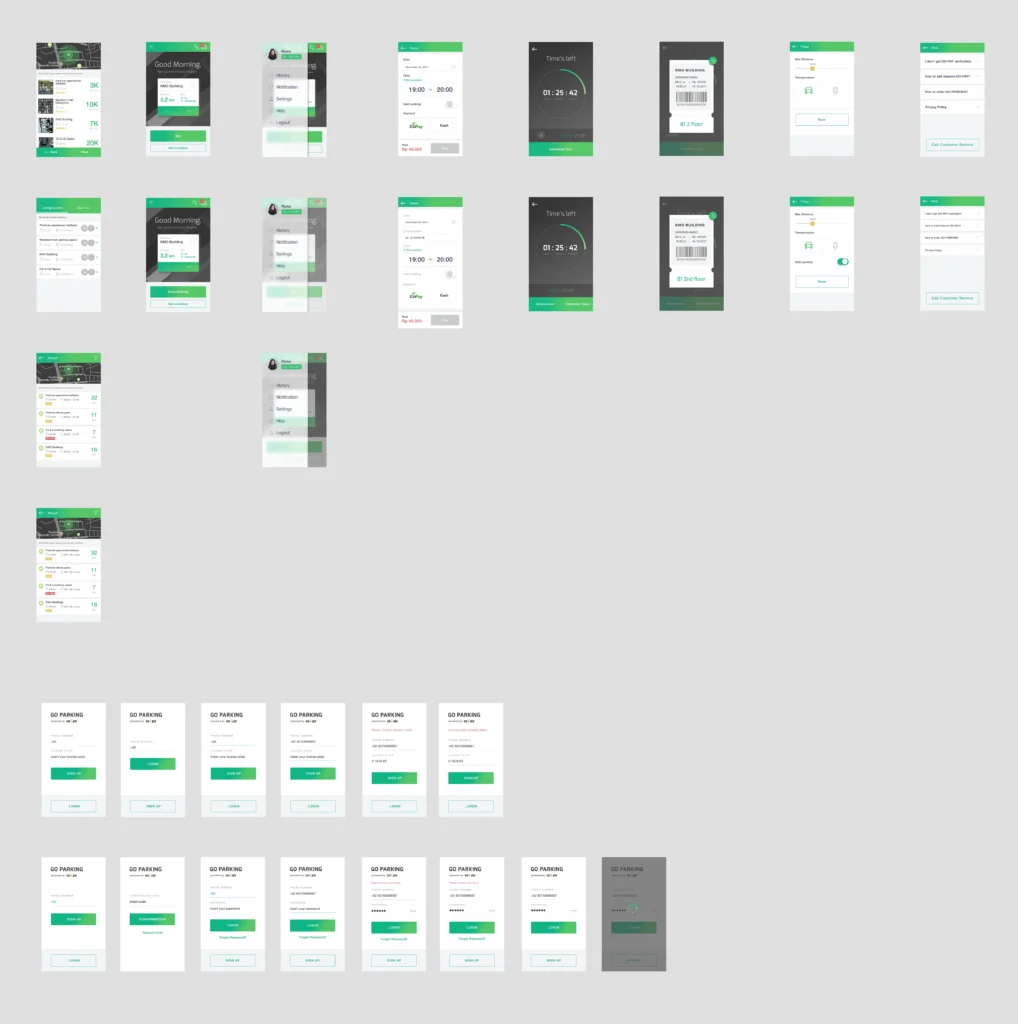
- App UI/UX
Date
24 November, 2017
Client
Gojek
Category
App UI/UX
Location
Indonesia
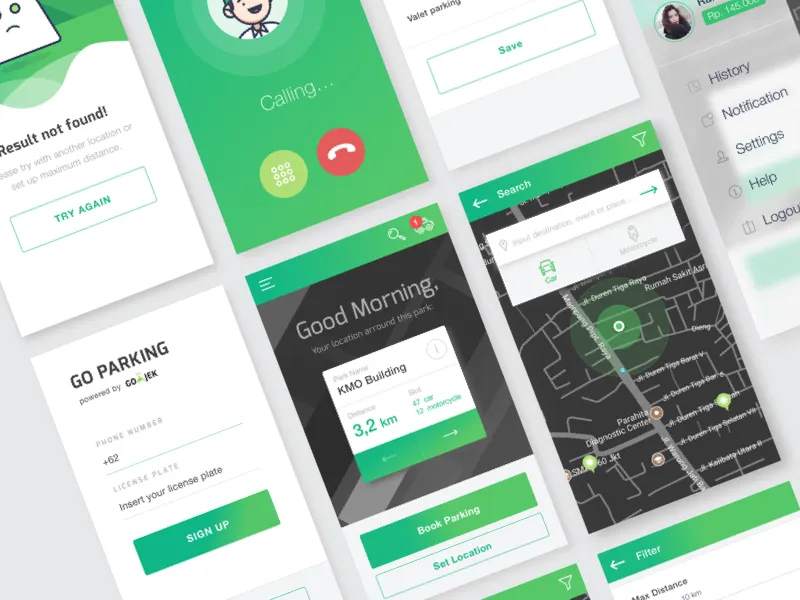
Happy Friday, everyone! The weekend is almost here. In our environment, we try not to think about anything work-related during the weekend—so just relax, enjoy, and welcome the day ahead!
Pembuka
First of all, thank you for taking the time to read our case study. While it may still feel a bit rough, I hope you can see the thinking process behind it.
I was given the challenge of building a parking application. At first, I thought I could complete it within a week because it seemed simple—users just need to find parking, make a booking, and that’s it.
But in reality, it turned out to be much more complex than I expected. This is a fairly complex product, involving payments, parking slots, license plate numbers, tickets, and more.
As I conducted research, many questions started to emerge. For example:
- Can users only book for one vehicle, or multiple vehicles?
- If it’s limited to one, then only a single license plate is needed.
- But if multiple vehicles are allowed, users would need to input license plates manually, which would significantly impact the UI layout and flow.
And many more questions came up as I continued validating with participants.
So, to be honest, this application is not yet finished and still requires improvements in many areas. However, the main goal of this article is to gather feedback from all of you, so I can improve this case study and make it more successful in terms of UX metrics.
Let me introduce Gojek—one of the largest companies in Indonesia. Locally, we often describe Gojek as ‘palugada’ (anything you need, we’ve got it).
Gojek offers a wide range of services: GoPay for payments, GoMassage for booking therapists, GoFood for food delivery, GoSend for shipping, and much more—all within a single platform.
Now, imagine if Gojek could also help you find and book parking.
Parking is a real challenge—especially on weekends in major cities or during large events. It’s a common pain point that many people experience.
So, let me walk you through what I’ve been working on in this project
- Research
- Concept Design
- Implementation
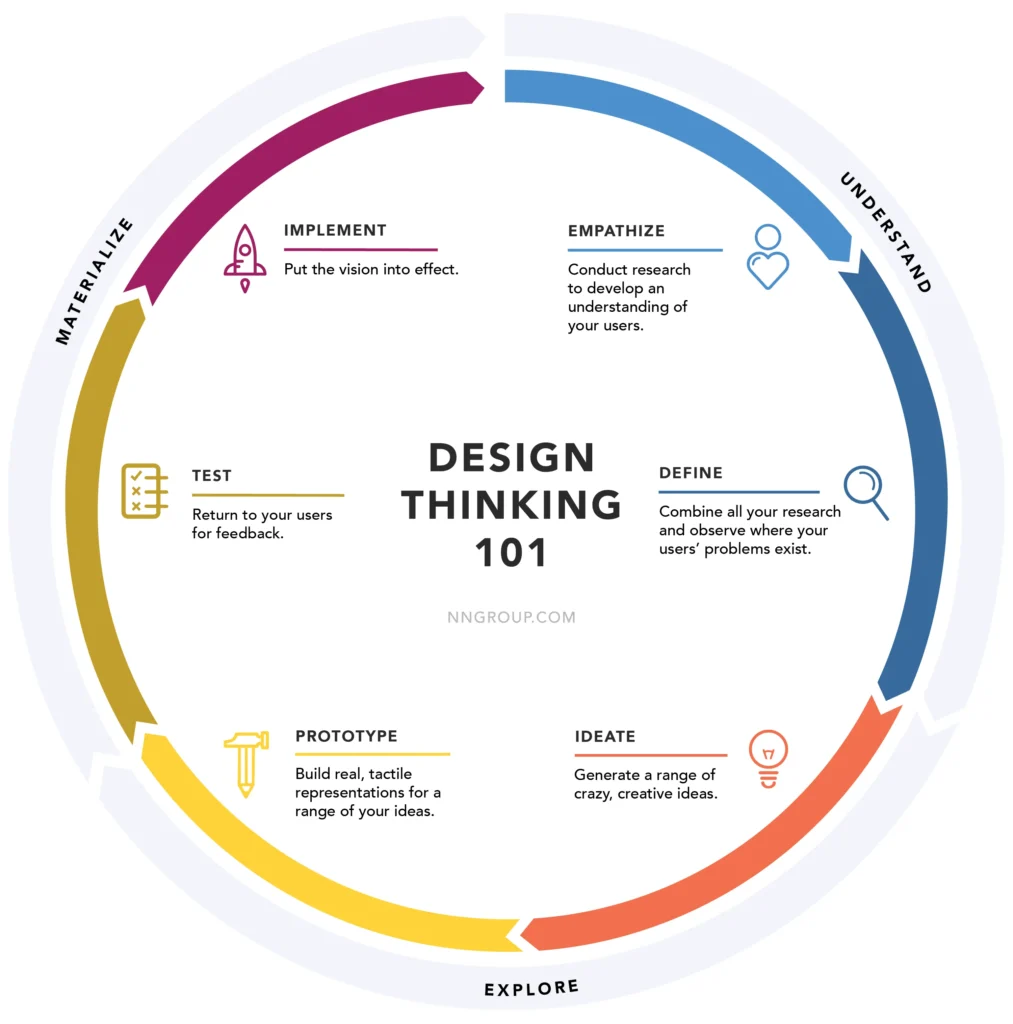
Desain Proses
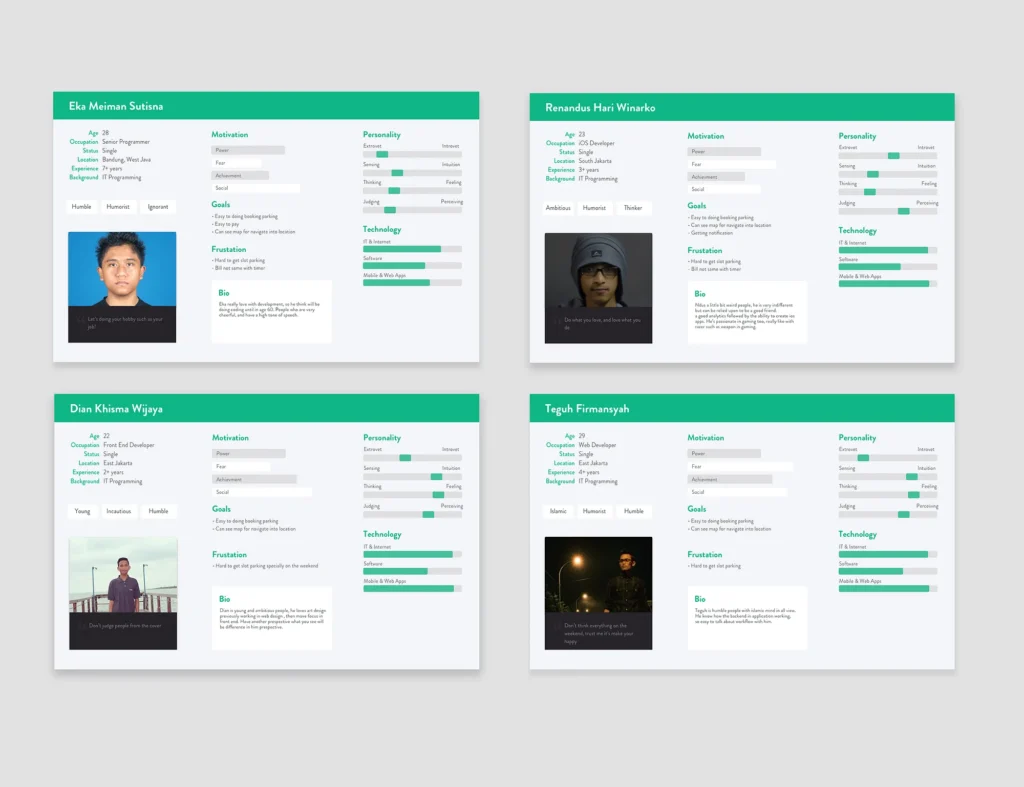
Personas
We had four participants who were fully involved in the research. To be honest, we received feedback from more than four people, but we considered only four as core participants. The others contributed through smaller inputs, such as answering a few questions or participating in A/B testing. Below are the participant details:
Define Problem
We conducted research on parking at BIP and Borma, as well as with participants, and identified the following key issues.
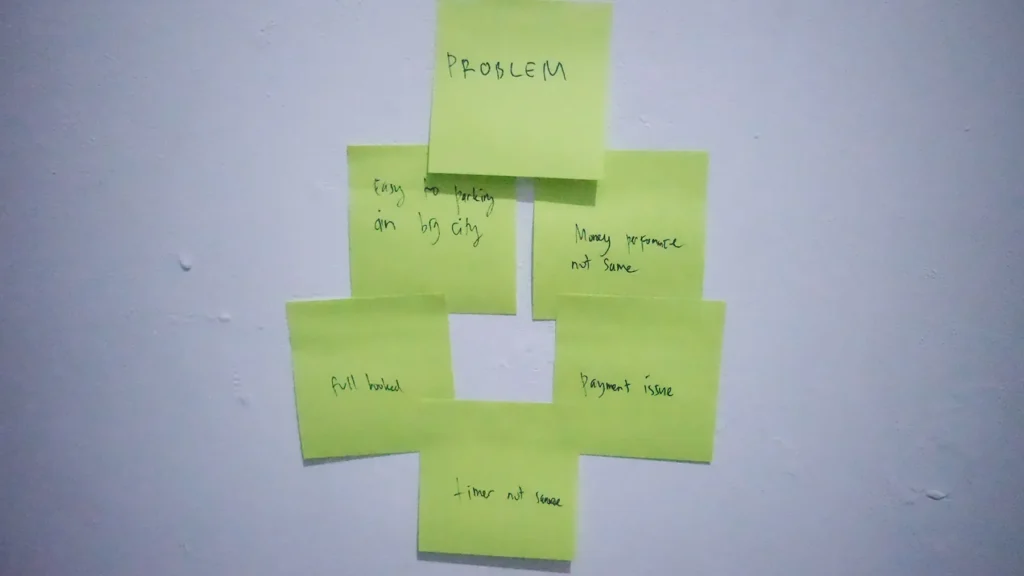
We explored the problem using mind mapping—hopefully this handwritten version is still readable (even though it might be a bit difficult to read).
Mind mapping is a method for capturing ideas and thoughts in a more visual way. It was popularized by Tony Buzan, a well-known British author and TV personality.
This approach is considered more effective than the linear note-taking system most of us have used since elementary school. Traditional vertical note-taking—using numbers and sequences—does not align well with how our brains actually work.
Linear note-taking primarily engages the left brain, while mind mapping activates the right brain, involving creativity, imagination, visualization, and a deeper connection with the subconscious. As a result, it becomes easier to understand and remember information.
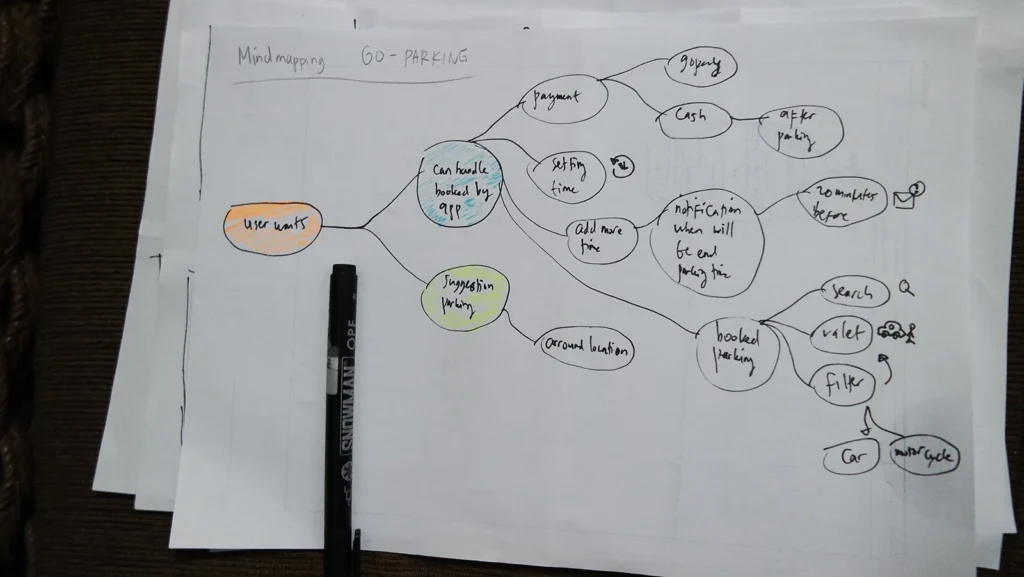
- 1. As a user, I want to easy booked parking using app, So never again getting no slot when I come to building park.
- 2. As a user, I want to easy managing my time, So I can see time’s left and getting notification when times upcoming the end.
- 3. As a user, I want to easy pay, So I can pay using gopay and cash
- 4. As a user, I want to easy getting ticketing, So I know when I come out , billling , time and etc.
Flow Chart
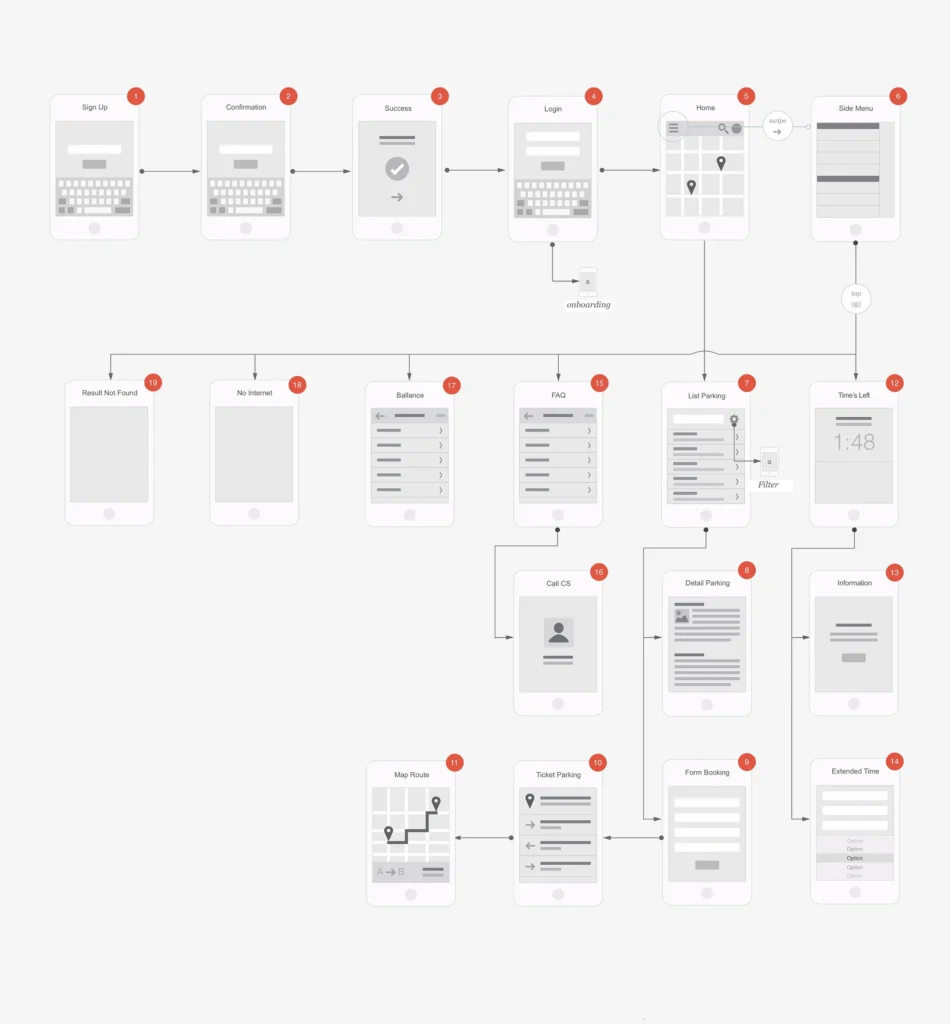
Flowcharts are extremely helpful for visualizing the workflow of an application or website. Based on our experience, they can also help estimate project timelines.The main function of a flowchart is to illustrate and simplify a sequence of processes or procedures, making them easier to understand and follow step by step.Goal:
- 1. Easy to order
- 2. Mudah menemukan tempat parkir yang tersedia
- 3. Ticketing
Sketch on Paper
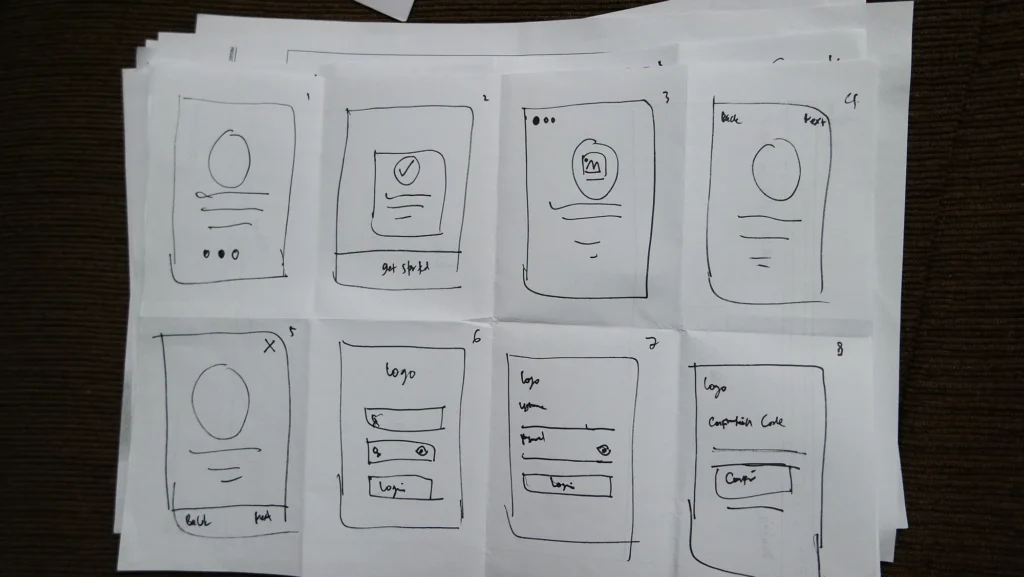

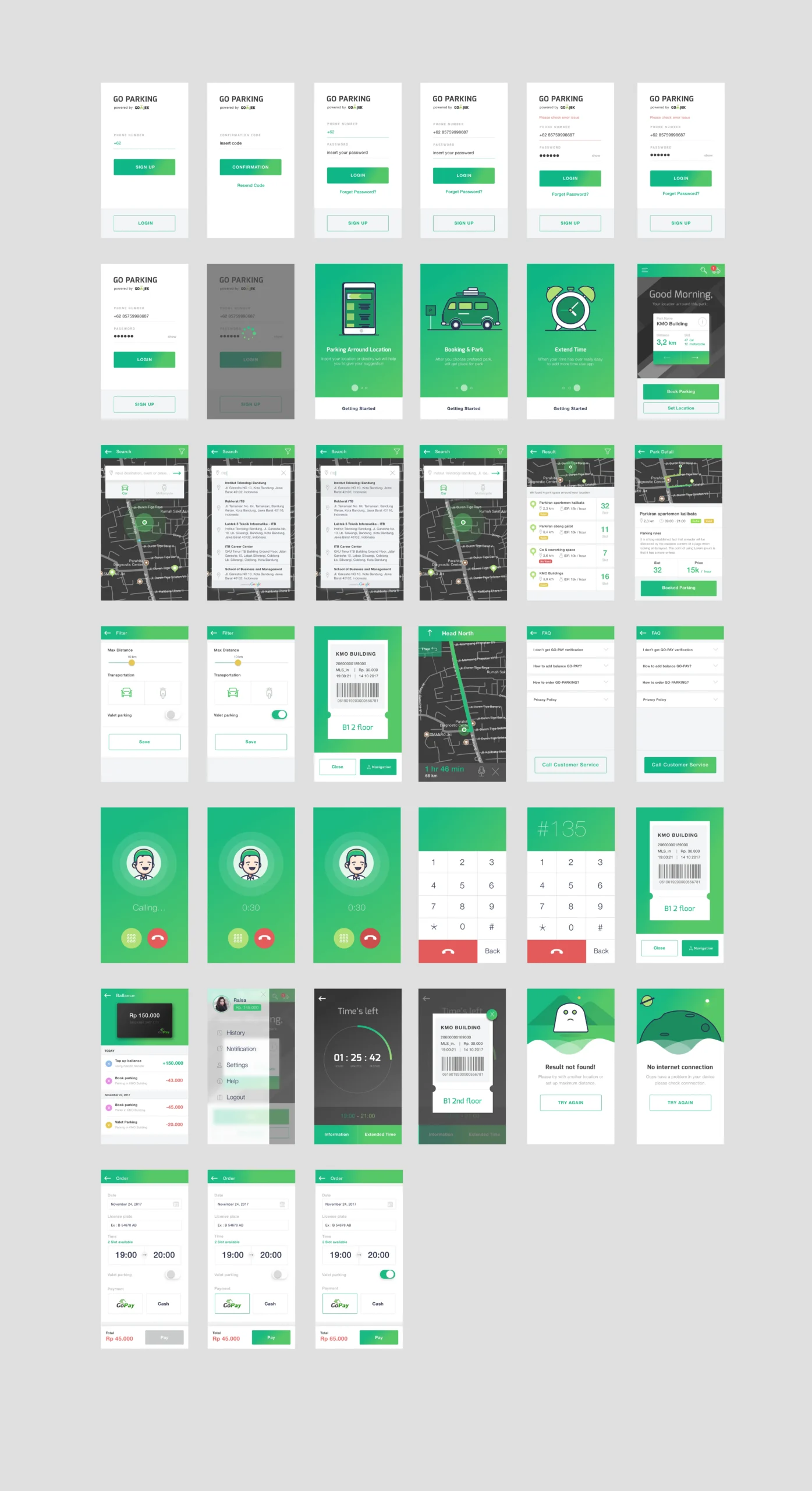
Are you still reading our case study? Really? Thank you 🙂 Let me explain what we did during the testing phase.We conducted guerrilla testing with 7 participants.We assigned several tasks to participants to gather UX metrics, and they completed them using the InVision app. Our role was to observe, analyze, and ask questions when necessary.After conducting guerrilla testing, we discovered many issues—some of which remain unresolved to this day (haha). We believe that there is no such thing as a perfect User Experience (UX) in the long term. What feels perfect today—like a login layout—may no longer meet user expectations tomorrow. That’s why continuous improvement is essential.For example: We spoke with Renandus about the possibility of implementing “one-click” login, such as fingerprint authentication. He mentioned that he had never used it before, so he wasn’t sure if it was possible. However, in my opinion, perhaps in the next 5 years, fingerprint login could become standard and significantly improve user convenience.Imagine you are in your car and need to log into a banking app to send money to your parents, who urgently need it due to a health issue. You’re in a panic. What would you expect from the app?a. 1 minute to log in b. 30 seconds to log in c. As fast as possibleWe chose “c.”In many cases, login speed forms the user’s first impression of your application. If it takes too long, users may perceive the app as slow, frustrating, and abandon it. If it’s fast? Users feel satisfied and are more likely to use the app frequently.What do you think? Do you agree or disagree with us? Why?Back to the main topic, after guerrilla testing, we reviewed and analyzed user feedback. Honestly, not all user perspectives are correct or should be followed. We need to filter feedback carefully and clearly explain why certain suggestions are not implemented.After filtering, we proceeded to update the design—this is what we call iteration. In many cases, we used quick paper sketches and validated ideas rapidly, similar to an agile design approach.Finally, we conducted A/B testing to ensure that the new screens performed better than the previous design.